
SCIENCE
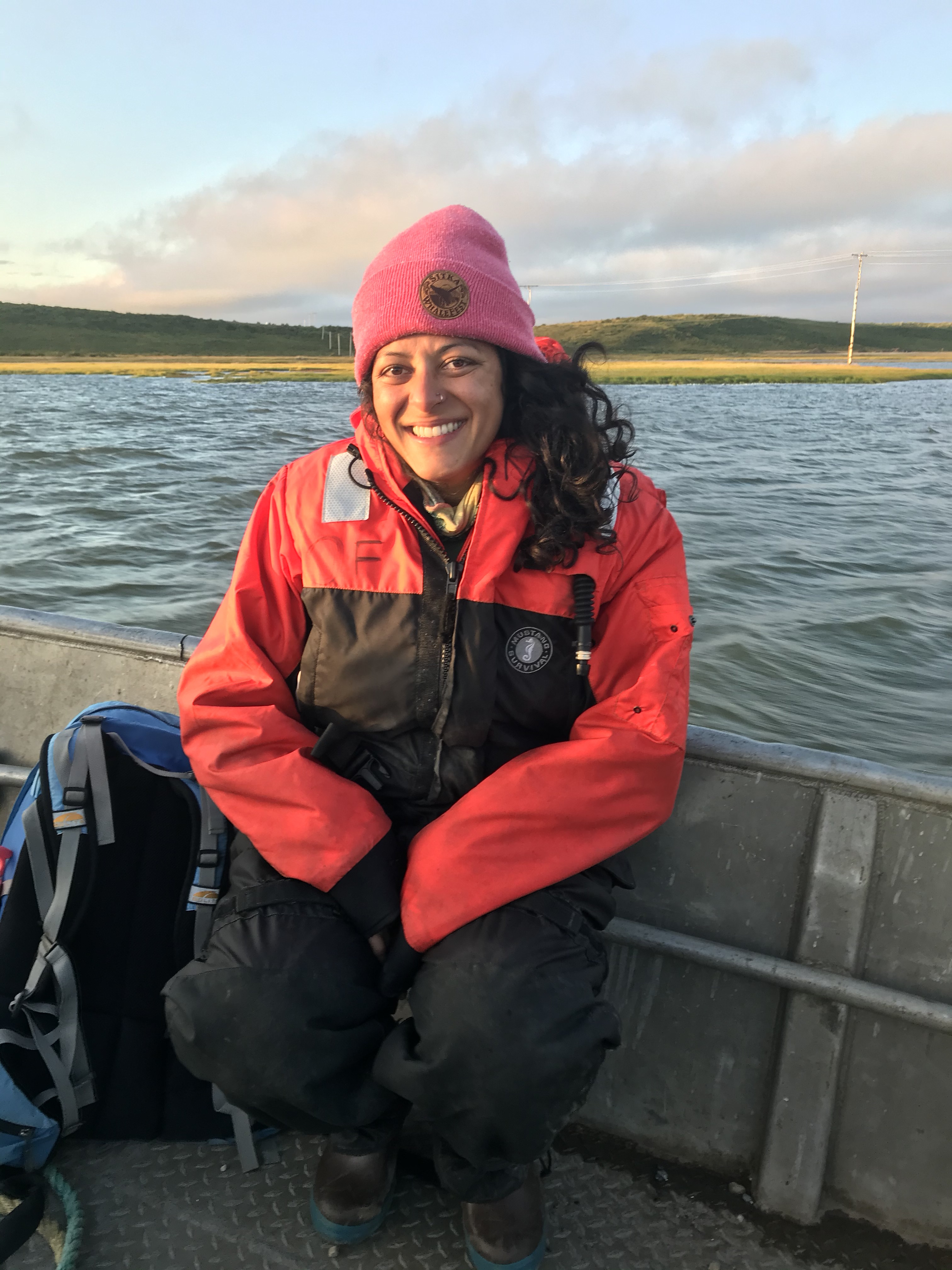
Climate change is creating a new environment for marine life and research into the extent of these effects is critical for understanding and mitigating the negative impacts on marine organisms. One by-product of climate change, in tandem with the growing human population, is the increase in anthropogenic noise in the world’s oceans. The Cook Inlet region in southcentral Alaska is a significant area for oil and gas development and is growing as a hub for Arctic shipping traffic. Passive acoustic monitoring is a novel way to monitor these growing underwater acoustic sources. Additionally, these waters provide habitat for critically endangered Cook Inlet beluga (CIB) whales (Delphinapterus leucas), which use a variety of vocalizations to communicate, hunt, and navigate (Castellote et al. 2020). My research uses passive acoustic monitoring (PAM) devices to document habitat usage and anthropogenic noise in two rivers that feed into Cook Inlet. The heart of the National Aeronautics and Space Administration’s (NASA) mission is to increase knowledge of the unknown by driving technological advancements and promoting stewardship of the Earth. NASA currently has a program to study ways to create quieter skies by means of muffling airplane engine noise. This project would be a steppingstone to understanding how coastal and river-going vessels contribute to underwater noise pollution, which has the potential to facilitate research on how to mitigate sound from the most impactful sources. This project will utilize cutting edge passive acoustic technology to monitor a critically endangered species and aligns with NASA’s Science Mission Directorate, understanding how a marine system responds to natural and human sources. These outcomes have direct implications for marine mammal management and can be applied to other Arctic and sub-Arctic coastal systems.
Profile
Name: Sonia Kumar, Graduate Student
Institution: University of Alaska Fairbanks
Mentor: Lara Horstmann, lara.horstmann@alaska.edu
Award: Research Grant
Funding Period: 2021 to 2022