
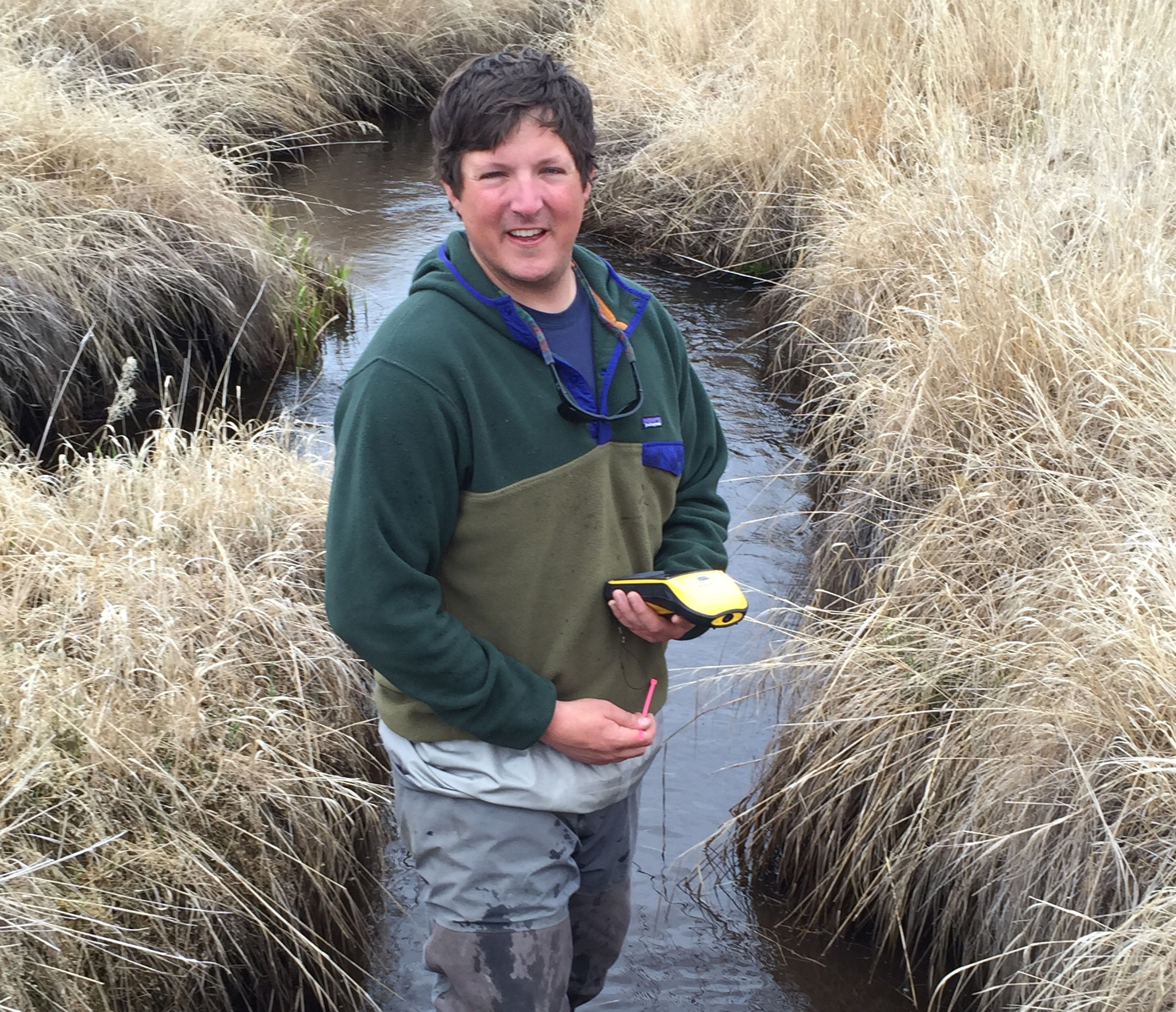
Temperature information derived from Landsat satellites may provide valuable insight into the temporal and spatial effects of global climate change on Alaska’s freshwater ecosystems and in particular the recent declines in Chinook salmon (Onchorhynchus tshawytscha) runs. Alaska’s Chinook salmon runs have decreased by more than 60 percent in the last decade, reaching the lowest level on record in 2010 (Evenson and Carlile 2014). The resulting hardships to fishery-dependent Alaskan communities led the U.S. Secretary of Commerce to declare fisheries disasters in 2010 and 2012 (Locke 2010, Blank 2012). These declines in Chinook salmon abundance remain unexplained. Griffiths and Schindler (2012) and numerous other workers have demonstrated that salmon survival during early life stages is strongly correlated with natal stream temperatures. However, monitoring water temperatures in Alaska’s salmon rearing areas is particularly difficult due to the size and remoteness of salmonproducing watersheds. Landsat thermal imagery provides a synoptic landscape scale temperature information source that has been successfully used to predict stream temperatures, but which requires ground-truthing (Handcock et al. 2006).
Profile
Name: John Hagan, Graduate Student
Institution: Alaska Pacific University
Mentor: Brad Harris, bharris@alaskapacific.edu
Award: Research Grant
Funding Period: 2015