
Pronounced warming of the Arctic is driving significant physical and ecological changes, including losses in extent of perennial snowfields. Perennial snowfields are masses of snow and ice that persist for many years. Like glaciers, they form through accumulation and compaction of seasonal layers of snow, however, in contrast to glaciers; these features never grow thick enough to flow under the influence of gravity. Perennial snowfields can alter hydrology, geology, permafrost distribution, and are important ecosystems for an array of animals, including caribou.
This research will quantify how perennial snowfields in the central Brooks Range Mountains in Gates of the Arctic National Park and Preserve are changing, and will address impacts to hydrology and subsistence caribou hunting. The research objectives are to model historic and recent changes in extent, simulate future persistence, and explore interactions with caribou.
This study area is remote, so NASA’s satellite products are imperative to the project. NASA remotely sensed and modeled information utilized includes Landsat imagery, climate reanalysis data, and digital elevation models (DEMs). These NASA products will help in understanding changes to the climate, land, and ice systems on earth, and will inform stakeholders in Alaska.
Profile
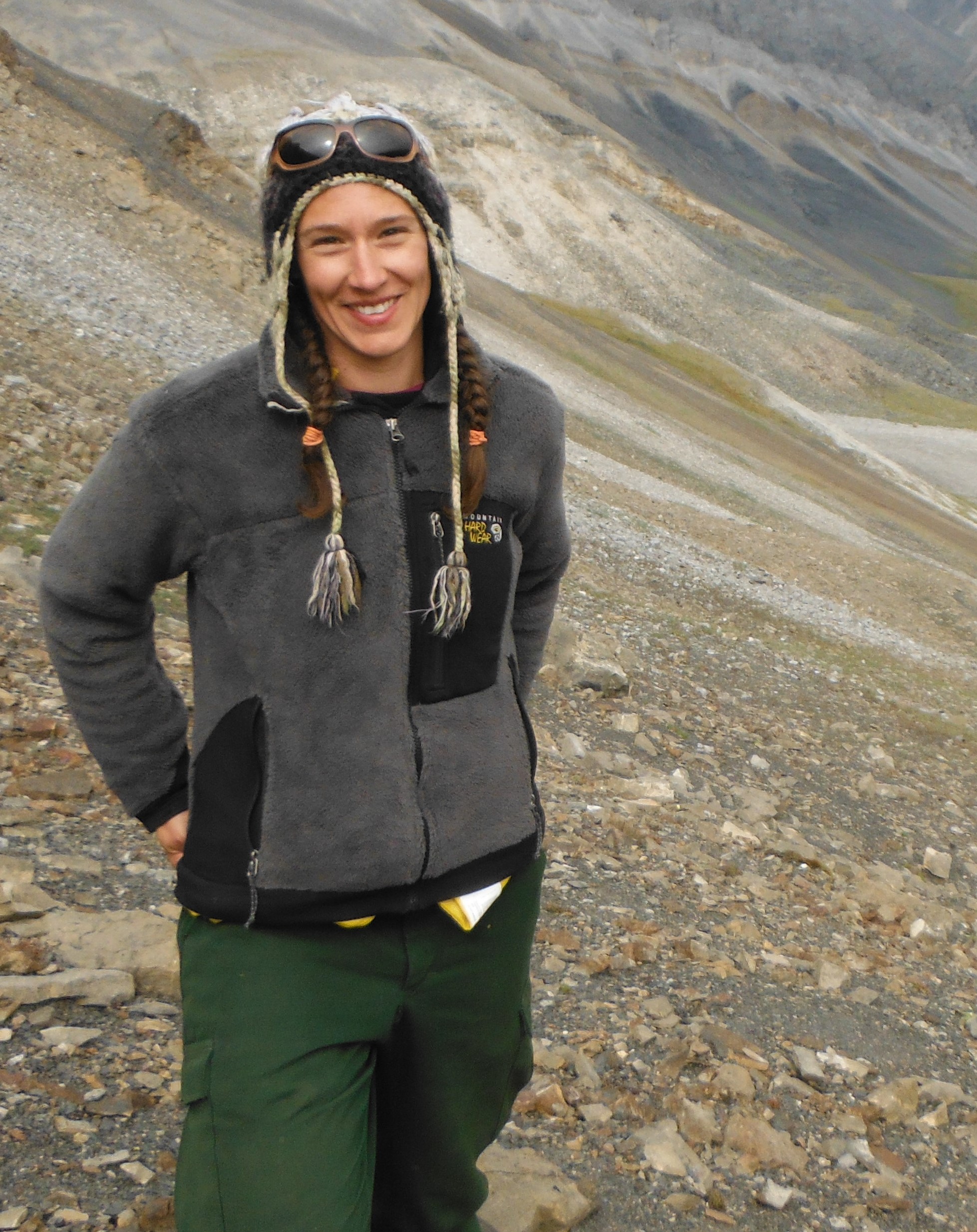
Name: Molly Tedesche, Graduate Student
Institution: University of Alaska Fairbanks
Mentor: David Barnes, dlbarnes@alaska.edu
Award: Research Grant
Funding Period: 2016