
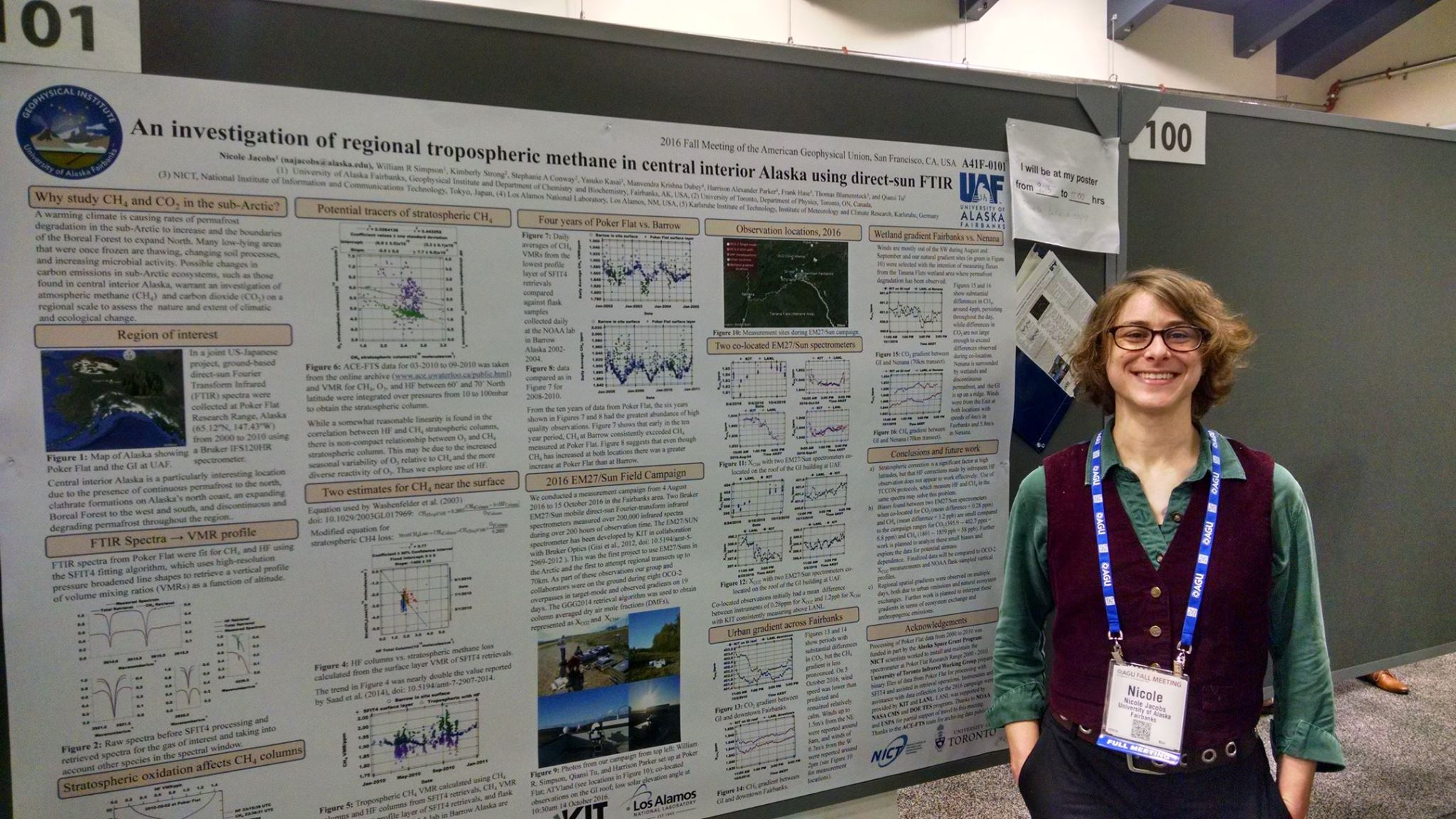
According to the IPCC, 2013, carbon dioxide and methane have the highest radiative forcing of all of the anthropogenic greenhouse gases and their current and potential role in the climate system needs study. High-latitude ecosystems are particularly vulnerable to the effects of rising temperatures and global climate shifts, which have the potential to initiate positive feedback mechanisms to warming and changes in ecosystem regimes. Massive carbon stores in the permafrost of interior Alaska may be released by increased microbial activity if the permafrost continues to thaw and degrade. Continued monitoring of carbon exchange at high latitudes is an important component of monitoring the progression and impacts of climate change.
Satellite-based spectroscopy can probe carbon dioxide and methane exchange on a global scale. These instruments measure infrared light reflected off the Earth to quantify the total column density of atmospheric gases. These observations need to be validated by ground-based measurements, but there is a limited number of ground-based monitoring sites at high latitudes. Infrared measurements at high latitudes present additional challenges that are less problematic at lower latitudes and need to be investigated to ensure data quality. Thin clouds can cause scatter, low solar elevation angles increase the atmospheric pathlength (an effect that needs to be corrected for to calculate the total column abundance), and low temperatures and highly variable annual stratospheric dynamics can complicate data collection and analysis. By comparing ground-based, satellite, and aircraft observations of carbon dioxide and methane in central Alaska, we can determine whether significant disparities exist between these different observation methods and quantify biases. If biases are found, this may elucidate important characteristics of these methods and allow for improved methodologies in future measurements.
Profile
Name: Niki Jacobs, Graduate Student
Institution: University of Alaska Fairbanks
Mentor: Bill Simpson, wrsimpson@alaska.edu
Award: Research Grant
Funding Period: 2017