
Monitoring volcanic activity is vital in the mitigation of threat posed by eruptions. By analyzing infrared (IR) time series data, subtle changes in volcanic activity can be readily detected and evaluated. The two sensors primarily used for early detection of volcanic activity are the NOAA AVHRR and NASA MODIS. Synthetic Aperture Radar (SAR) data can provide wider spatial coverage of a changing volcanic system as well as provide observations irrespective of the local atmospheric conditions. The motivation for this project is to build a combined IR and SAR system.
Pavlof volcano, located in the Eastern Aleutian Arc, is one of the most active in the Aleutians, with frequent small explosions and occasional lava flows. The focus of this research will be the eruption that took place in March-April of 2016. Satellite IR data will be analyzed for evidence of changes in thermal activity prior to the eruption. Earlier detections from the MIR and TIR data will lead to the SAR data from Sentinel being processed earlier than either a manual tasking or changes in a volcanoes color code. These data can then be analyzed for evidence of volcano-wide deformation. Detection of these subtle signals as early as possible can provide critical information for real-time volcano hazard assessment.
Profile
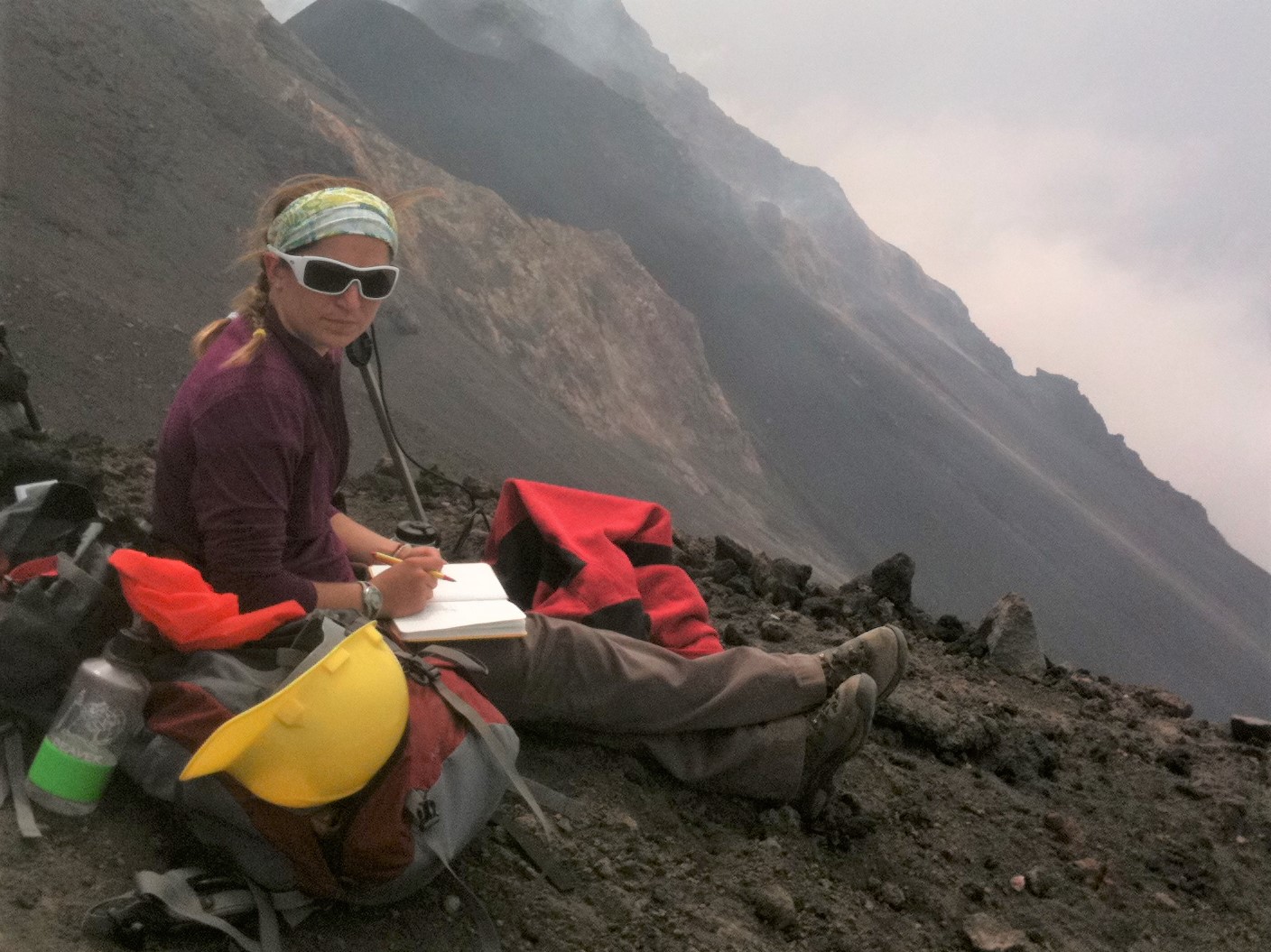
Name: Anna Worden, Graduate Student
Institution: University of Alaska Fairbanks
Mentor: Peter Webley, pwwebley@alaska.edu
Award: Research Grant
Funding Period: 2018