
The purpose of this research project is to discover ultrafast novae in the nearby Andromeda Galaxy (M31). This research aligns with the goals that fall directly under the first core context of NASA’s Science Mission Directorate, which is Discovering the Secrets of the Universe. This objective by NASA strives to understand and solve the mysteries of outer space in order to comprehend the universe and our place in it. NASA’s goal in the Astrophysics Division is to “Discover how the universe works, explore how it began and evolved, and search for life on planets around other stars.” (National Academies of Science 2010). Novae are an important source of the elements Carbon, Nitrogen, and Oxygen (CNO), all of which are important for lifesupporting planets. In fact, roughly half of the abundances of these elements on Earth are from novae that exploded before our Solar System formed (Darnley et al. 2012). Knowing how frequently novae occur tells us how much of these elements are inside of a galaxy; and therefore, how likely it is to have life-sustainable planets like the Earth. “Ultrafast” novae may be a hidden population of novae that are producing significant amounts of CNO. These novae are predicted to exist but unlike “normal” novae that appear and disappear on a longer timescale, ultrafast would appear and disappear within hours, hence it is possible they have not yet been detected due to previous nova surveys only taking one image of the galaxy per night (Shara et al. 2017). Therefore, in Fall 2018 we took images of M31 with the WIYN 0.9-meter telescope at Kitt Peak National Observatory (KPNO) every hour during the night, for two weeks in total. I will be performing image processing of our data with various software programs and python scripts in order to conduct an analysis to detect the presence of ultrafast novae. If detected, a frequency can be calculated to compare their relative rate among all novae. If not detected, we can establish upper limits on their frequency.
Profile
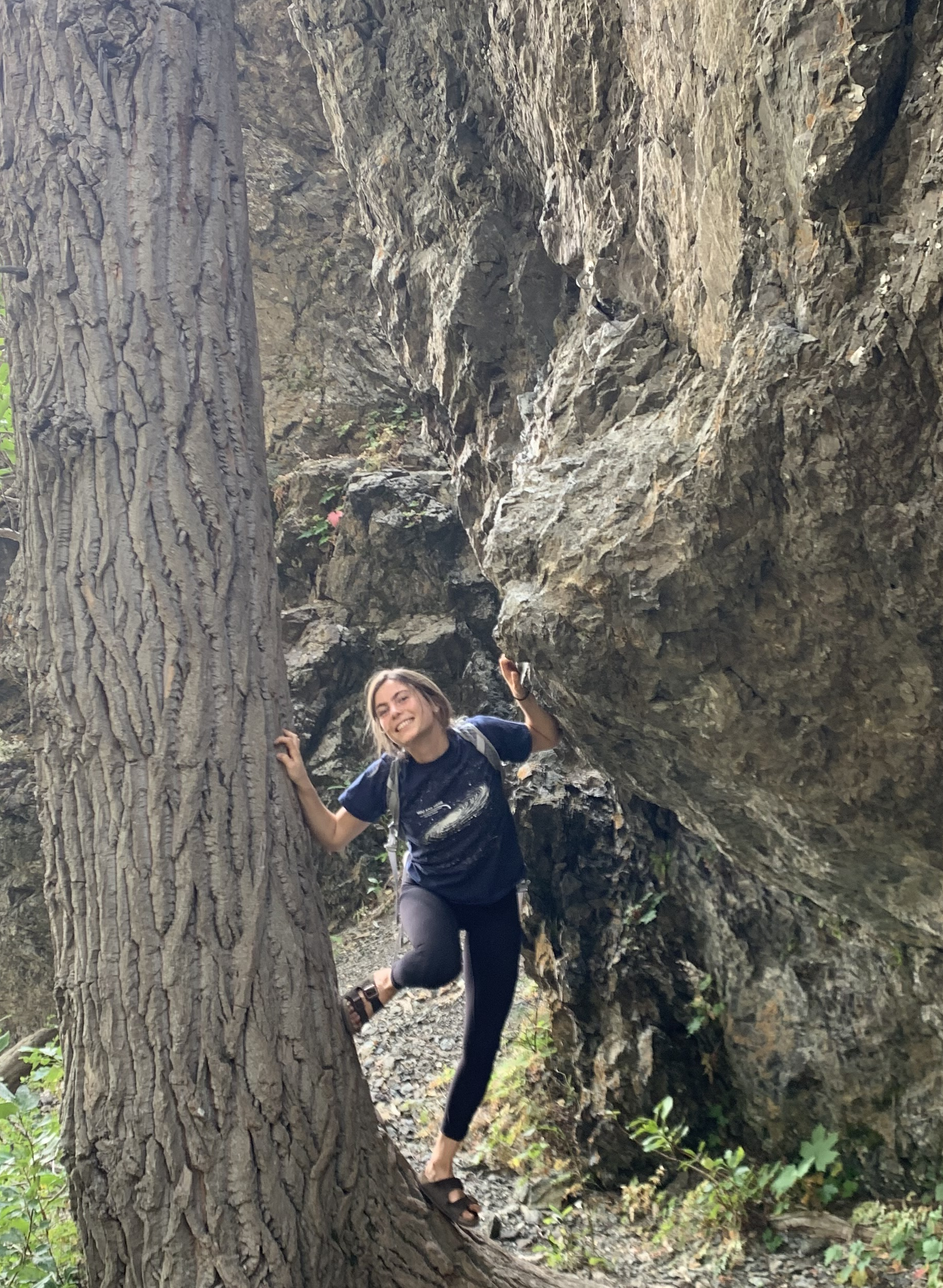
Name: Hannah Crayton, Undergraduate Student
Institution: University of Alaska Anchorage
Mentor: Travis A. Rector, tarector@alaska.edu
Award: Apprenticeship
Funding Period: 2019 to 2020