
HUMAN EXPLORATION AND OPERATIONS | SPACE TECHNOLOGY
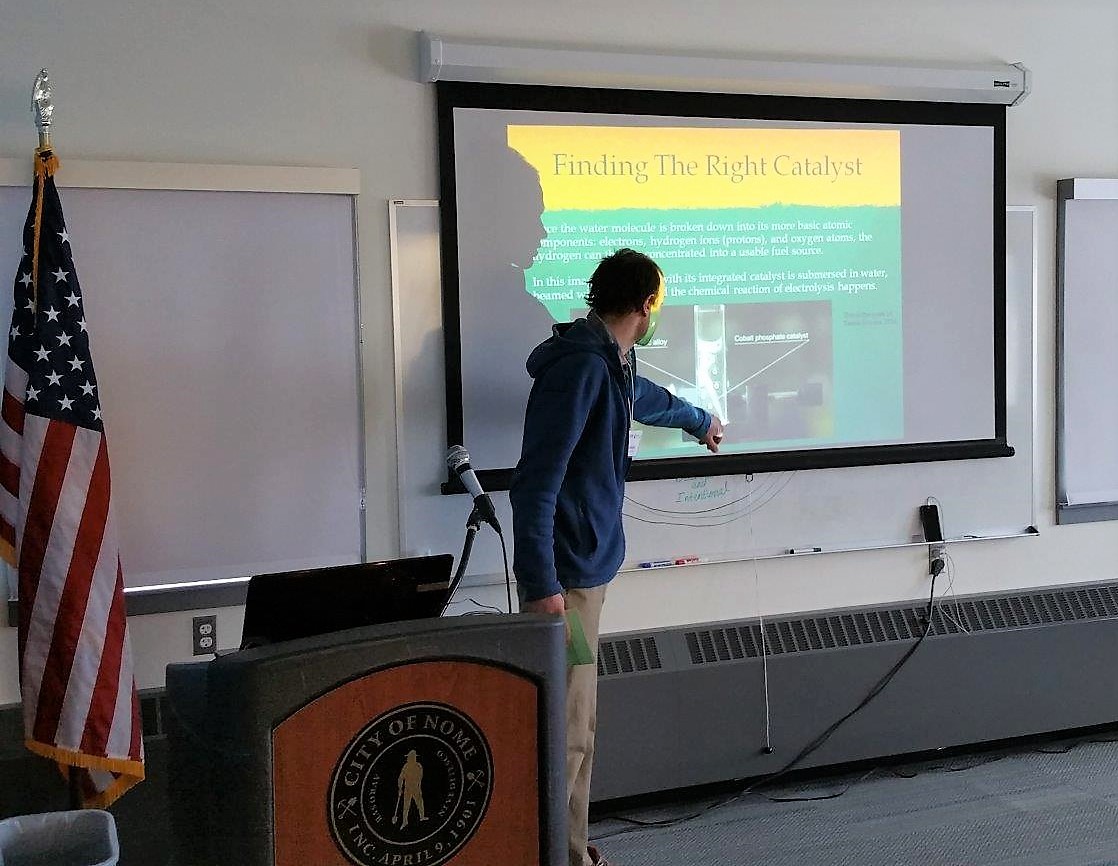
UAF Bristol Bay Campus has been offering a Sustainable Energy Occupational Endorsement program. One of the main classes in the program is a distance‐delivered PHYS 102X Energy and Society. It is a distance‐delivered 4‐credit STEM course related to NASA’s Greenspace program. One of the components of the course is a project in which some students deal with real‐life energy‐related issues in their communities. These projects include hands‐on activities as well as theoretical analysis. Similar to NASA’s challenges, these projects deal with remote locations and extreme environments.
Previous funding from the Alaska Space Grant Program (ASGP) allowed to establish NASA presence and develop an asynchronous version of the PHYS 102X Energy and Society course. Thanks to this asynchronous version, students are now able to complete the course in their own time, via recordings, discussions on discussion boards, lab kits mailed to students, and other asynchronous means. This makes the class accessible to students with non‐traditional schedules and helps avoid schedule conflicts. Thanks to this increased access, enrollment in Spring 2019 far exceeded expectations and there were additional students who were denied to enroll because there were no more lab kits available to be loaned to them.
In the current round of funding for year 2019‐2020, the project team seeks to purchase additional lab kits and increase the capacity of the course. Thanks to a new formal partnership between the UAF Bristol Bay Campus, Alaska Center for Energy and Power (ACEP), and the Cold Climate Housing Research Center (CCHRC), the project team also seeks to enhance labs revolving around ACEP and CCHRC fields of expertise. The project team seeks to deliver the revised course with increased capacity in academic year 2019‐2020. The ultimate goal of this project is to contribute to the development of STEM workforce in sustainable energy, which is an interdisciplinary field relevant to NASA.
Profile
Name: Tom Marsik, Associate Professor
Institution: University of Alaska Fairbanks
Award: Higher Education, Project
Funding Period: 2019